Wet press Vs Dry press
Molded pulp is the best alternative to plastic foam and thermoformed plastic inserts. Made primarily from recycled paper fibers, molded pulp offers excellent product protection.
Two of the most common manufacturing methods are wet press and dry press molding. Although both use recycled fiber as their primary raw material, the production process, appearance, and performance differ considerably.
What Is Dry Press Molded Pulp?
Dry press molded pulp, sometimes called transfer molded pulp, is one of the most widely used forms of molded fiber packaging.
The process begins by forming a pulp slurry from recycled paper fibers and water. A vacuum mold shapes the pulp into the desired form, after which the product is transferred to a drying oven where moisture is removed.
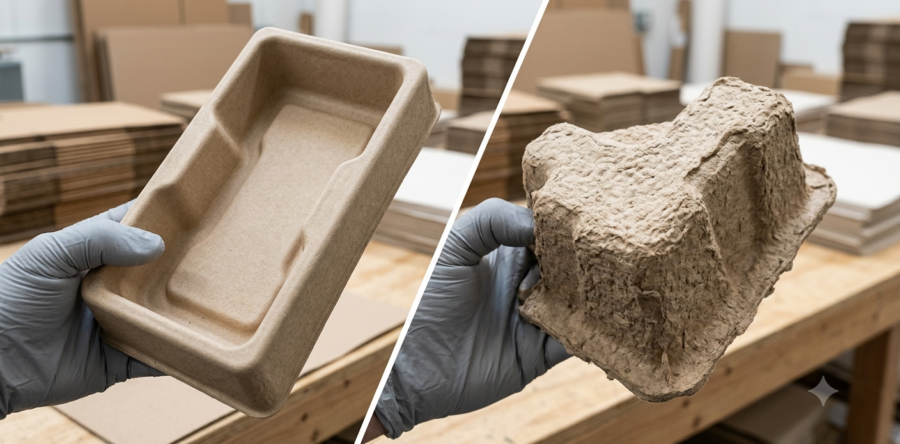
The finished packaging typically has a slightly textured surface with a natural matte appearance.
Dry press molded pulp is commonly used for:
- Produce trays
- Egg cartons
- Industrial packaging
- Protective shipping inserts
- Electronics packaging
- Beverage carriers
What Is Wet Press Molded Pulp?
Wet press molded pulp follows a similar initial process but includes an additional pressing stage before final drying.
After the pulp is molded, it is compressed using heated precision molds. This extra step smooths the surface, removes additional moisture, and creates a denser, more refined product.
The result is packaging with a cleaner finish, sharper details, and improved dimensional accuracy.
Wet press molded pulp is often chosen for premium consumer products where appearance is just as important as protection.
It is frequently used for:
- Luxury retail packaging
- Consumer electronics
- Cosmetics
- Wine and spirits
- High-end gift packaging
- Premium food presentation
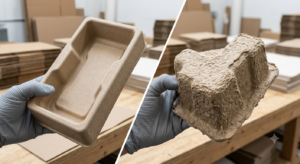
Appearance
One of the most noticeable differences between the two manufacturing methods is the finished surface.
Dry press molded pulp has a more natural, fibrous texture that clearly reflects its recycled paper origins. Many businesses appreciate this appearance because it reinforces sustainability and environmental responsibility.
Wet press molded pulp offers a much smoother finish with cleaner edges and more precise molding. This makes it particularly attractive for brands seeking a premium, modern aesthetic.
The choice often depends on whether functionality or visual presentation is the primary priority.
Strength and Performance
Both wet press and dry press molded pulp provide excellent cushioning and product protection.
- Dry press packaging performs exceptionally well in shipping environments where impact resistance and cost efficiency are the main concerns.
- Wet press packaging, while also protective, provides greater dimensional consistency and a more rigid feel due to the additional compression during manufacturing.
Cost Considerations
Dry press molded pulp generally requires fewer processing steps, making it a more economical choice for large production runs and industrial applications.
Wet press packaging involves additional equipment, precision tooling, and pressing operations, resulting in higher manufacturing costs.
Sustainability Benefits
Regardless of the production method, both wet press and dry press molded pulp share important environmental advantages.
Both are typically manufactured using recycled paper fibers and renewable resources. They are widely recyclable, and, under appropriate conditions, many molded pulp products are also biodegradable or compostable.
This makes either option a far more sustainable alternative to many traditional plastic packaging materials.
Final Thoughts
Wet-press and dry-press molded pulp packaging both offer outstanding environmental benefits and reliable product protection, but they serve different purposes.
For in-stock options, check out our partner site WineShippingBoxes.com for molded pulp inserts ready to ship.