Molded Pulp vs. Foam Packaging

Shipping items long-distance tends to have serious challenges. The item travels thousands of miles via sea, air, and road. During shipping, there is often vibration, stacking pressure, fluctuations in humidity, and multiple handling instances. In such situations, your choice of packaging materials is important. Two mostly used protective options are molded pulp and foam.
By 2026, an increasing number of exporters are considering foam and transitioning to molded pulp packaging. In this article, we will be comparing the performance of both materials in the context of long-distance export packaging.
Molded pulp packaging

Molded pulp is made from recycled paper fibers formed into rigid, product-specific shapes. It is commonly used for bottles, electronics, industrial parts, and medical devices.
Foam packaging
Foam includes materials like EPS, EPE, and polyurethane. It cushions products through compression and is widely used for shock protection.
Both materials protect products, but they behave very differently over long export routes.
Performance under vibration and transit stress
Long-distance shipping exposes packages to constant vibration.
Foam performance
Foam absorbs shock initially, but over time it can compress permanently. Once compressed, it loses cushioning ability and begins transferring vibration directly to the product.
Molded pulp performance
Molded pulp disperses vibration across its fiber structure. It maintains its shape during extended transit, providing consistent protection from origin to destination.
For export routes involving weeks of movement, molded pulp offers more reliable long-term performance.
Structural strength and stacking
Export shipments are stacked tightly in containers and warehouses.
Foam limitations
Foam can deform under heavy stacking loads. This increases product movement and raises the risk of damage, especially at the bottom of pallets.
Molded pulp advantages
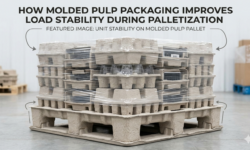
Molded pulp is rigid and load-bearing. It supports vertical stacking and helps maintain carton integrity throughout the supply chain.
This makes molded pulp ideal for palletized export shipping.
Humidity and climate resistance
Export routes often pass through humid ports and changing climates.
Foam in humid conditions
Some foams trap moisture between the product and the packaging. This can lead to condensation issues, corrosion, or label damage.
Molded pulp in humid conditions
Molded pulp manages moisture more evenly. It absorbs small amounts and releases them gradually, reducing condensation buildup and maintaining stability.
This makes molded pulp better suited for ocean freight and tropical shipping lanes.
Fit, consistency, and product control
Movement inside a box is one of the biggest causes of export damage.
Foam challenges
Foam inserts are often cut or molded in generic shapes. Over time, products can shift within the packaging.
Molded pulp precision
Molded pulp is designed with custom cavities that cradle each product securely. This limits movement, abrasion, and impact damage.
For fragile or high-value exports, precision matters.
Sustainability and compliance
Sustainability requirements are increasing globally.
Foam concerns
Foam is difficult to recycle, bulky to dispose of, and restricted in some international markets. Many countries are tightening regulations on plastic packaging waste.
Molded pulp benefits
Molded pulp is recyclable, biodegradable, and made from renewable resources. It aligns with international sustainability goals and reduces customs and disposal concerns.
For exporters shipping to multiple regions, molded pulp simplifies compliance.
Cost over long-distance shipping
Foam may appear cheaper upfront, but long-distance shipping tells a different story.
Foam increases costs through:
- Higher dimensional weight
- Increased damage rates
- Disposal fees
Molded pulp reduces costs by:
- Improving packing density
- Lowering breakage and returns
- Reducing waste handling
Over time, molded pulp delivers better total cost performance.
When foam still makes sense
Foam may still be useful for:
- Extremely lightweight items
- Short-distance shipments
- Highly specialized cushioning needs
However, these cases are becoming more limited in export-focused logistics.
Final verdict
For long-distance export packaging for 2026, molded pulp surpasses foam in terms of consistency, sustainability, stacking strength, and climate resilience.
For in-stock options, check out our partner site WineShippingBoxes.com for molded pulp inserts ready to ship.