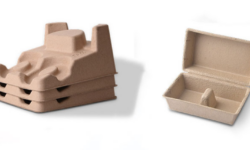
Molded Pulp Packaging for Heavy Industrial Parts

Heavy industrial components are not easy to handle during transportation. They tend to be large, heavy, occasionally irregularly shaped, and often costly to replace.
Molded pulp packaging is the best choice for industrial producers seeking durability without the use of excessive plastic. However, it performs well in certain situations yet falls short in others.
Why Molded Pulp Packaging Is Even Considered for Heavy Parts

Molded pulp packaging is made from recycled paper fibers, shaped into rigid forms that cradle products during transit. For industrial applications, it offers a few advantages:
- High compressive strength when designed correctly
- Shock absorption that reduces vibration damage
- Custom-fit designs for complex components
- Eco-friendly credentials, which matter more than ever
- Lower long-term cost compared to foam or plastic inserts
For manufacturers shipping items like metal fittings, valves, pump components, bearings, and automotive parts, molded pulp can be a smart move.
But only when done right.
What Works Well in Molded Pulp Packaging for Heavy Industrial Parts
1. It Offers Thick-Wall, High-Density Pulp Designs
Thin pulp trays won’t survive industrial loads. Successful applications use high-density molded pulp with thicker walls and reinforced edges. This increases load-bearing capacity and reduces crushing during stacking.
Bottom line: Density matters more than appearance.
2. Custom Molded Fits (No “One-Size-Fits-All”)
Heavy parts shift easily if the packaging leaves room for movement. Custom-moulded pulp inserts lock parts in place, reducing friction, impact, and surface damage.
This works especially well for:
- Irregularly shaped metal parts
- Multi-part assemblies shipped together
- Precision components with sensitive edges
3. Multi-Layer Packaging Systems
Molded pulp works best when it’s part of a packaging system, not a standalone solution. Pairing it with:
- Corrugated outer boxes
- Double-wall cartons
- Strapping or stretch wrap
creates a layered defense that handles weight and impact far better.
4. Stackable and Nestable Designs
Well-designed molded pulp packaging supports vertical stacking without collapsing. This reduces warehouse space, lowers freight costs, and improves pallet stability.
That’s a big win for industrial logistics.
Where Molded Pulp Packaging Fails (and Why)
1. Extremely Heavy or Sharp-Edged Components
Molded pulp has limits. Very heavy parts or items with sharp edges can cut through or crush pulp, especially under long shipping durations or rough handling.
If the part exceeds safe weight thresholds, foam or hybrid solutions perform better.
2. High-Moisture or Oil-Soaked Environments
Industrial parts are often greasy or exposed to moisture. Standard molded pulp absorbs liquids, which weakens its structure.
Without water-resistant coatings or liners, pulp packaging can fail fast.
3. Poor Design or Under-Engineering
This is the most common failure point.
Using pulp trays designed for light consumer goods in an industrial setting leads to:
- Cracking during transit
- Deformation under load
- Product movement and breakage
Heavy-duty applications demand engineering-grade design, not generic templates.
4. Long-Term Outdoor Storage
Molded pulp is not built for prolonged exposure to rain, humidity, or direct sunlight. If parts are stored outdoors before use, pulp alone won’t hold up.
When Molded Pulp Is the Right Choice
Molded pulp packaging works best when:
- Parts are heavy but within the tested load limits
- Designs are custom-engineered
- Packaging is used with outer protective cartons
- Sustainability and cost control are priorities
When those boxes are checked, molded pulp becomes a strong, reliable, and eco-friendly industrial packaging solution.
Final Takeaway
Molded pulp packaging is not weak. Poor design is
For heavy industrial parts, success depends on density, design precision, and system-level thinking. When those elements align, molded pulp delivers protection, performance, and sustainability all without the plastic guilt.
For in-stock options, check out our partner site WineShippingBoxes.com for molded pulp inserts ready to ship.