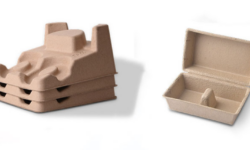
Molded Pulp Packaging and Drop Test
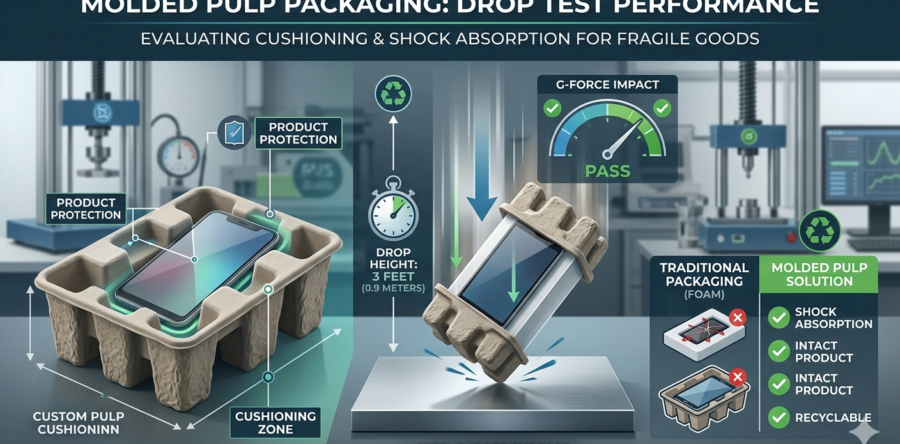
When it comes to shipping fragile products, one question matters: Will the packaging survive impact?
Packages are dropped, stacked, and handled repeatedly during transit. That is why drop testing is a standard method for evaluating packaging performance.
What Is a Drop Test in Packaging?
A drop test simulates real-world handling conditions. Packages are dropped from specific heights and angles to measure how well the packaging protects the product inside.
Typical drop test scenarios include the following:
- Flat drops (top, bottom, or sides)
- Edge drops
- Corner drops
These tests help manufacturers understand how packaging responds to sudden impact forces. The goal is simple: ensure the product remains undamaged after repeated drops.
Why Drop Test Performance Matters
Shipping environments are unpredictable. Packages move through conveyor belts, are loaded into trucks, and handled by multiple workers. Even with careful handling, drops are unavoidable.
If packaging cannot absorb shock effectively, products inside may crack, dent, or break. This leads to returns, replacements, and customer dissatisfaction.
How Molded Pulp Absorbs Impact
Molded pulp packaging is made from compressed recycled fibers that form rigid yet slightly flexible structures. This combination is key to its drop test performance.
When a package is dropped, molded pulp works in two ways;
First, it absorbs energy. The fiber structure compresses slightly on impact, reducing the force transferred to the product.
Second, it distributes pressure evenly. Instead of concentrating impact in one area, molded pulp spreads the force across its structure.
Secure Product Positioning
Molded pulp inserts are designed to hold products firmly in place. By reducing internal movement, they prevent items from colliding with the outer box or with each other during impact.
This is especially important during corner and edge drops, where internal shifting can cause significant damage.
A well-designed molded pulp insert keeps the product centered and supported throughout the drop.
Performance Compared to Other Materials
Foam packaging offers strong cushioning but lacks sustainability benefits. Molded pulp provides a balance between protection and environmental responsibility.
In many drop test scenarios, molded pulp performs competitively by combining structural support with shock absorption.
Its ability to maintain shape while cushioning impact makes it a reliable option for many industries.
Designing for Better Drop Test Results
Not all molded pulp packaging performs the same. Design plays a major role in drop test success.
Factors that improve performance include:
- Proper product fit
- Adequate wall thickness
- Reinforced corners
- Balanced weight distribution
Custom-designed inserts tailored to specific products provide the best protection. Generic packaging may not offer the same level of security.
Final Thoughts
Drop test performance is an important measure of packaging effectiveness. In real shipping conditions, impacts are unavoidable, and packaging must be able to absorb and manage these forces.
Molded pulp packaging offers a strong combination of shock absorption, structural support, and product stability. It helps reduce damage, lower return rates, and improve customer satisfaction.
For in-stock options, check out our partner site WineShippingBoxes.com for molded pulp inserts ready to ship.