How Molded Pulp Packaging Supports Zero Landfill Packaging

The concept of zero landfill has evolved beyond a mere marketing slogan. It has become a tangible business objective. Companies are facing pressure to minimize waste and contribute to a zero-landfill goal. A promising solution that is gaining attention is molded pulp packaging.
So, how does molded pulp packaging contribute to achieving zero landfill targets?
What Is Zero Landfill Packaging?

Zero landfill means designing packaging systems where materials are:
- Recyclable
- Compostable
- Biodegradable
- Reusable
- Made from recycled content
The goal is simple: Nothing ends up in a landfill. Every material must re-enter the production cycle or safely break down in the environment.
It is Made from Recycled Materials
Molded pulp packaging is typically made from recycled paper, cardboard, or other fiber waste.
Instead of sending used paper to the landfill, manufacturers repurpose it into
- Protective inserts
- Wine bottle shippers
- Electronics trays
- Industrial packaging
This circular use of materials reduces raw resource demand and keeps waste out of disposal sites.
Using recycled input materials is the first step toward zero landfill systems.
It is fully recyclable after use.
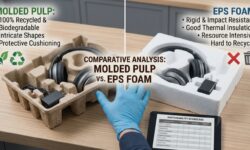
Unlike foam or mixed-material packaging, molded pulp can go straight into standard paper recycling streams. Consumers are more likely to recycle something that fits easily into existing systems. That increases recovery rates and supports landfill diversion.
It is Biodegradable and compostable.
Even in cases where recycling does not happen, molded pulp has another advantage: it naturally breaks down. Because it is fiber-based and free from harmful synthetic materials, it decomposes much faster than plastic alternatives. It helps reduce long-term environmental impact if disposal occurs.
For companies targeting zero landfill certification, compostable packaging adds another layer of environmental responsibility.
It Reduces Plastic and Foam Dependency
Traditional packaging often uses
- Expanded polystyrene (EPS) foam
- Plastic trays
- Air-filled plastic cushions
These materials are difficult to recycle and frequently end up in landfills.
It is designed for product protection.
Molded pulp packaging is designed to absorb shock, cushion impact, and securely hold products in place. Custom molds create tight fits that reduce movement during shipping.
Lower product damage also supports zero landfill strategies by preventing unnecessary disposal.
It Supports Corporate ESG Goals
Environmental, Social, and Governance (ESG) reporting has become standard for many companies.
Using molded pulp packaging helps brands demonstrate:
- Reduced plastic usage
- Increased recycled material content
- Improved waste diversion rates
- Lower carbon footprint compared to foam production
These measurable improvements align directly with sustainability reporting and zero landfill commitments.
It Encourages Consumer Participation
Today’s consumers pay attention to packaging. When customers see recyclable, fiber-based molded pulp instead of plastic foam, it sends a clear message: this brand values sustainability.
Clear recycling instructions further encourage responsible disposal. Zero landfill is not only about manufacturing decisions. It also depends on consumer behavior. Molded pulp makes responsible disposal easier.
Final Thoughts
Molded pulp packaging contributes to zero landfill packaging objectives by integrating recycled materials, recyclability, biodegradability, and robust product protection.
For available options, please visit our partner site WineShippingBoxes.com for molded pulp inserts that are ready for shipment.