How Molded Pulp Packaging Handles Vibration in Transit

Shipping damage is a result of a single significant drop. Instead, it typically occurs due to continuous vibration. Trucks produce a rumbling sound. Conveyors experience shaking. Planes emit a hum for extended periods. Gradually, these minor movements accumulate and damage the packaging.
So how does molded pulp packaging manage vibration during transportation, and why is it relied upon for delicate and high-value products?
What causes vibration damage during shipping?
Vibration damage happens when products move repeatedly inside a box. Even slight movement can lead to:
- Surface abrasion
- Internal cracking
- Loosened seals or closures
- Label scuffing
- Long-term structural stress
Glass bottles, electronics, and precision items are especially vulnerable. If packaging does not absorb motion, the product absorbs it instead.
Molded pulp is designed to absorb movement

Molded pulp packaging is made from recycled paper fibers formed into custom shapes. These shapes are not just for fit. They are engineered to manage energy.
Here is how molded pulp handles vibration effectively.
1. Natural cushioning from fiber structure
Molded pulp has a porous, fibrous structure. This structure acts like a built-in shock absorber.
When vibration occurs:
- Fibers compress slightly
- Energy disperses across the surface
- Motion slows before it reaches the product
Unlike rigid plastic, molded pulp does not transfer vibration directly. It softens it.
2. Snug, custom-fit design reduces movement
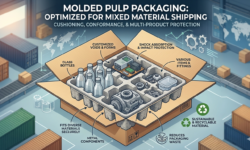
One of the biggest causes of vibration damage is empty space. Molded pulp inserts are designed to cradle products tightly.
Benefits of a secure fit include:
- Less product shifting
- Reduced friction inside the box
- Even weight distribution
When the product cannot move, vibration has little impact.
3. Multi-point contact for better stability
Molded pulp packaging supports products at multiple contact points. This spreads vibration across the insert instead of concentrating it in one area.
This is especially useful for:
- Wine and spirits bottles
- Glass containers
- Medical and lab equipment
More contact points mean more stability during long journeys.
4. Progressive energy absorption
Vibration is not a single event. It happens thousands of times during transit.
Molded pulp performs well because it absorbs energy gradually. Each small movement is dampened, reducing cumulative stress on the product. Over time, this prevents fatigue damage that often goes unnoticed until delivery.
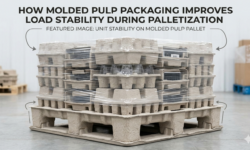
5. Consistent performance in stacked shipments
During shipping, boxes are stacked. Weight increases. Pressure changes.
Molded pulp maintains its shape under load. This helps it continue absorbing vibration even when:
- Pallets are double-stacked
- Boxes are tightly packed
- Transit time is extended
The result is consistent protection from start to finish.
6. Tested to meet transit standards
Many molded pulp designs are tested under industry vibration and drop standards. These tests simulate real-world shipping conditions.
Common outcomes include:
- Lower breakage rates
- Fewer returns
- Improved customer satisfaction
This is why molded pulp is widely used in wine, electronics, and industrial packaging.
Why molded pulp beats loose-fill and foam
Loose-fill shifts over time. Foam can rebound and transfer energy back to the product. Molded pulp stays in place and continues working.
Key advantages:
- No settling during transit
- No rebound effect
- Predictable performance
It protects without overengineering.
Sustainability is a bonus, not a compromise
Beyond performance, molded pulp packaging is:
- Made from recycled materials
- Fully recyclable
- Biodegradable
You get vibration protection without adding plastic waste.
Final thoughts
Vibration is unavoidable in shipping. Damage is not. Molded pulp packaging reduces movement, absorbs energy, and protects products over long distances. It works quietly, consistently, and sustainably.
For in-stock options, check out our partner site WineShippingBoxes.com for molded pulp inserts ready to ship.