Branding on Molded pulp packaging
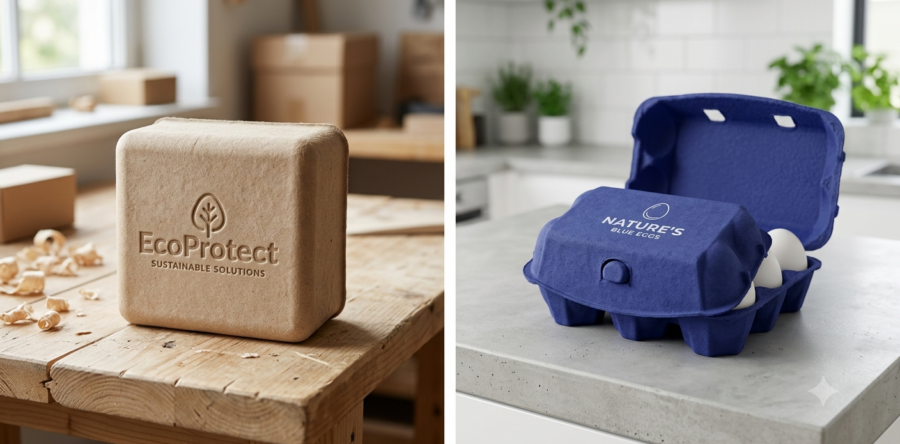
If you have only seen molded pulp packaging in gray or beige, you might think it is a branding dead end. Manufacturers use molded pulp for egg cartons, wine bottle sleeves, and electronics trays.
It supports branding through color, logos, and other elements. The packaging options include plastic and cardboard. They still deliver a distinctive, on-brand unboxing experience.
Why Molded Pulp Branding Works Differently
Manufacturers press recycled paper fibers, cardboard, or agricultural waste into shape with water and heat to form molded pulp. Textured and slightly porous surfaces reduce the effectiveness of standard offset printing. This is a design consideration rather than a limitation.
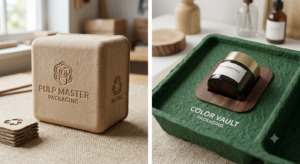
Coloring Molded Pulp Packaging
There are two primary ways to introduce color:
- We add color directly to the pulp before molding. The entire piece, inside and out, carries a consistent tone. This is a popular choice for brands wanting a signature color that reinforces identity at every touch point, such as a wine box interior in deep burgundy or a cosmetics tray in soft blush.
- After molding and drying, manufacturers apply a colored coating to the visible surface. This allows for sharper contrast and multi-tone designs but adds an extra production step and cost.
Manufacturers do not add extra coatings, making dyed slurry cost-effective for large runs and aligning with the material's eco-friendly positioning.
Adding Logos and Branding Elements
Beyond color, several techniques let brands stamp their identity directly onto pulp packaging:
- Embossing or Debossing—A raised or recessed logo pressed into the pulp during molding. This is one of the most popular options because it doesn't require ink, keeps the packaging fully recyclable, and creates a tactile, premium feel.
- Screen Printing—Works well for simple, bold logos or single-color designs printed directly onto the molded surface.
- Adhesive labels or inserts: a printed label applied after molding. It is useful for brands that want full-color, photo-quality graphics without altering the pulp production process.
- Custom Mold Tooling – For brands producing at scale, custom molds can be engineered so the logo or pattern is built into the shape itself, eliminating the need for secondary branding steps entirely.
Things to Keep in Mind
- Recyclability – Dyes and embossing generally preserve the pulp's recyclability; heavy coatings or plastic-based labels may reduce it, so check with your supplier if sustainability certification matters to your brand.
- Minimum Order Quantities – Custom dyed pulp and tooled molds often require higher minimums than stock, natural-colored packaging.
- Lead Times—Custom branding, especially new mold tooling, adds production time compared to using ready-made pulp inserts.
Choosing the Right Approach
If you are launching a new product line or want packaging that instantly signals your brand before the box is even opened, custom-colored or embossed pulp packaging is worth the investment. If you are testing a concept, running a smaller batch, or needing packaging quickly, starting with stock molded pulp and layering in a printed label can be a smart middle ground.
Molded pulp has come a long way from plain, utilitarian trays. With the right combination of color and branding techniques, it can be just as expressive as any other packaging material while staying true to its sustainable roots.
For in-stock options, check out our partner site WineShippingBoxes.com for molded pulp inserts ready to ship.