The Lifecycle of Molded Pulp
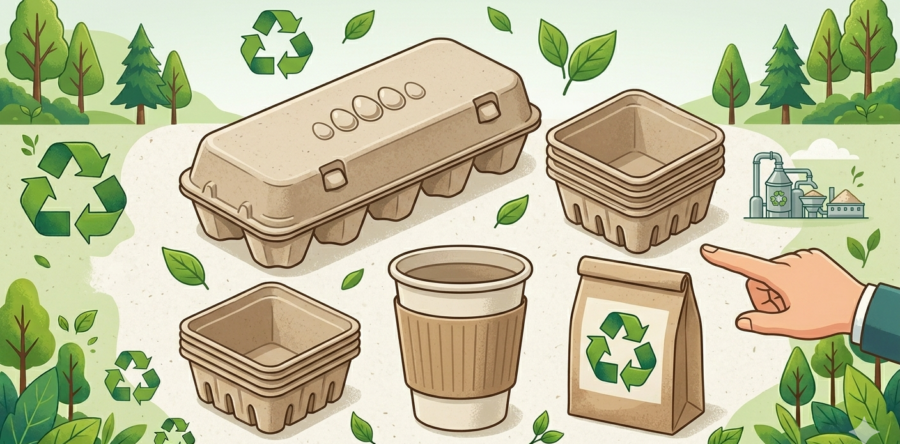
What makes molded pulp truly sustainable is not just the material itself; it is the entire lifecycle. From recycled paper fibers to reuse and recycling, molded pulp is designed to support a circular economy while reducing environmental impact.
Step 1: It Starts with Recycled Paper
The lifecycle of molded pulp begins with recovered paper products.
Instead of relying on virgin plastic or petroleum-based materials, manufacturers use recycled paper, cardboard, newspapers, and other paper fibers that have already served a previous purpose.
These recovered materials are collected, sorted, and cleaned before entering the manufacturing process. Giving paper fibers a second life helps reduce the demand for new raw materials while diverting waste from landfills.
Step 2: Turning Paper into Pulp
Once collected, the recycled paper is mixed with water to create a pulp slurry.
During this stage, contaminants such as staples, adhesives, and other unwanted materials are removed to produce a clean fiber mixture. Depending on the intended application, manufacturers may also refine the pulp to achieve the desired strength, texture, and molding characteristics.
Step 3: Molding and Drying
The pulp slurry is then transferred into specialized molds.
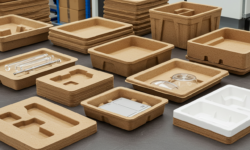
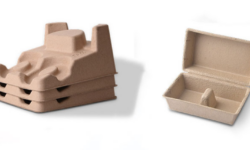
Vacuum technology draws the fibers evenly across the mold surface, creating packaging with precise dimensions and product-specific cavities. Whether producing trays for fresh produce, protective inserts for electronics, or packaging for medical devices, molded pulp can be customized to hold a wide range of products securely.
After molding, the packaging is dried using heated equipment or controlled drying systems. This removes excess moisture while giving the finished product its strength and durability.
Step 4: Reuse and Recycling
Unlike many single-use plastic packaging materials, molded pulp often has multiple end-of-life options.
In many cases, businesses and consumers can recycle molded pulp through local paper recycling programs, provided it is clean and accepted by their local recycling facility.
Step 5: Composting and Natural Decomposition
Because molded pulp is made primarily from natural paper fibers, it breaks down far more readily than conventional plastic packaging. Instead of remaining in the environment for decades or even centuries, molded pulp gradually decomposes into organic matter.
This characteristic helps reduce landfill waste and supports more sustainable waste management practices.
Step 6: Supporting a Circular Economy
One of the greatest strengths of molded pulp is that its lifecycle reflects the principles of a circular economy.
Rather than extracting new raw materials for every product, manufacturers continuously reuse recovered paper fibers to create new packaging. After use, the packaging can often re-enter the recycling system and begin the process again.
This continuous cycle conserves resources, reduces waste, and lowers the environmental impact of packaging across multiple industries.
For in-stock options, check out our partner site WineShippingBoxes.com for molded pulp inserts ready to ship.